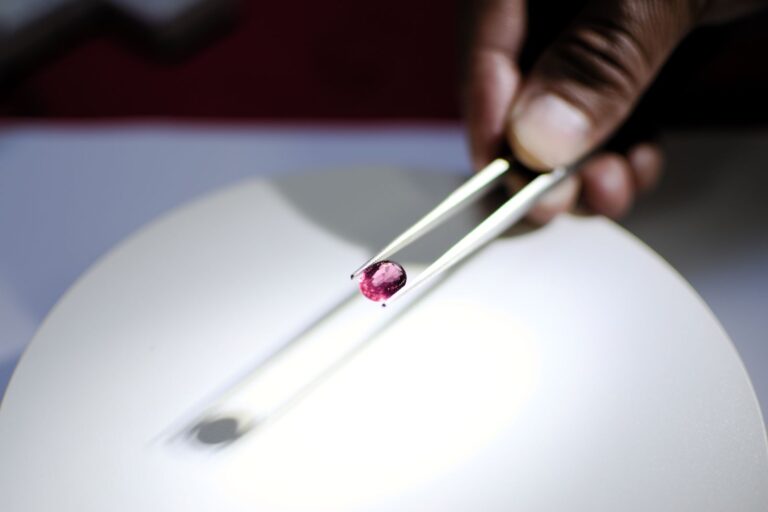
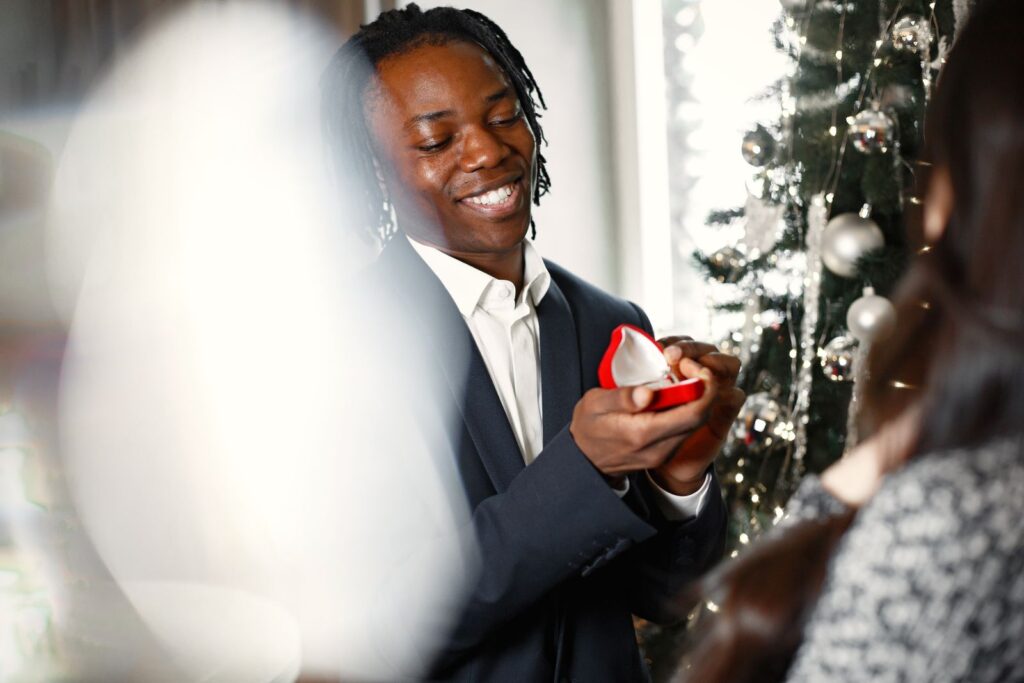
Every year around this time, the bridal ads come out. Snow. A ring box. A couple who have clearly never argued about anything.
And every year they arrive late, because engagement season for jewelers does not start when the proposal happens. It starts when somebody decides which two stores they are going to visit.
The Knot’s 2026 study of more than 10,000 couples, as reported by JCK, says around 40% of proposals happen between Thanksgiving and Valentine’s Day. That part everybody knows. Here is the part that should change what you do this week: the average proposer visited two retailers and looked at ten rings.
Two. Not your whole county. If you are not one of the two by the time they get in the car, your December ad is a lovely piece of filmmaking for somebody else’s customer.
Around 40% of proposals fall between Thanksgiving and Valentine’s Day, but the proposer has usually been browsing for months, then decides fast and visits about two stores. So be known before they choose: run broad, useful content now and keep reaching your warm audience for months. Remember that 79% of recipients are involved, so talk to both people. Make booking an appointment easy, because 64% still buy in person. Answer fast. Publish your real lead times for custom work so nobody discovers in December that a Christmas proposal needed an October order. And capture the date, because the engagement ring is the first sale, not the last one.
IBrowsing takes months. Deciding takes weeks.
Two of The Knot’s numbers look like they disagree. 57% began searching more than six months out. And 77% spent four months or less on research and purchase.
We read those together as two stages. There is a long, quiet stage where somebody saves things, looks at a friend’s ring, and starts forming an opinion about what a nice ring looks like. Then there is a short, serious stage where they pick stores and spend money.
Each stage needs something different from you.
The quiet stage needs you to be familiar. Nobody is ready to buy, so a “shop now” ad is shouting at a person who is still working out what a four-prong setting is. What works here is what we would run for any brand development job: the bench, the custom build, an honest explainer about stone shapes or how to choose a setting. It earns a place in their memory at very little cost.
The serious stage needs you to be easy. They have a shortlist of two. They want to know you are real, what you carry, roughly what it costs, and how to get an appointment. This is where most jewelry websites hand the customer to a competitor, by making them hunt for a phone number.
IIYour retargeting window is longer than you think.
If browsing runs for months, a one-week retargeting window is a very expensive way of only talking to people who already decided.
This is why we keep repeating that retargeting for a jewelry website should be broad: recent site visitors, Instagram and Facebook engagers, people who watched your videos, over a long window. Not just the cart abandoners. Nine out of ten people who abandoned a cart decided not to buy. Following only them around the internet? It’s like asking a girl out who already rejected you twice.
The person who looked at your engagement rings in September and has not been back is not lost. They are in the quiet stage. Show them something useful and worth watching, not a countdown.
IIIThe recipient is in the room.
Here is the number that the old bridal playbook never accounted for. 79% of ring recipients were involved in the process, and a quarter of couples shopped at a retailer together.
The movie version, where the ring is a total surprise, is now mostly a movie.
So your marketing has two audiences. The person buying, who is often anxious, wants reassurance: that they will not overpay, that they will not get it wrong, that somebody will explain it without making them feel stupid. The person wearing it wants it to be theirs: the shape, the setting, the metal. Round is still the most common shape at 26%, but oval is right behind it at 25%, and yellow gold has climbed to 39%. Your feed and your case should reflect what people are actually asking for, not what your best bridal rep was excited about in 2019.
Do not build this around narrow targeting. Let your creative do the sorting: an honest guide to choosing a stone will find the anxious proposer, and a piece on the setting will find the person who has opinions.
IVBe one of the two.
Since the shortlist is so short, the things that get you onto it are not glamorous.
- Make the appointment the easiest thing on your site. 64% bought in person. The website’s job for most of these customers is to get them through your door. If booking takes more than a minute on a phone, fix it this week.
- Answer immediately. A proposer who has finally worked up the nerve to send a message at 9 pm has also just messaged your competitor. Someone needs to reply quickly, or an automated reply needs to carry the conversation until a person can.
- Show real work with real prices, or at least real ranges. The Knot found an average spend of $4,600. Nobody is asking you to publish a price list if that is not how you sell, but a site that gives no clue at all reads as “if you have to ask”. An anxious buyer will go to whichever store does not make them ask.
- Be findable the moment they search your name. Some of the people you reached in the quiet stage will type your store’s name months later. A good Google Business Profile and a small brand campaign catch them.
And be honest about one thing. If your bridal business is genuinely small and your store is known for something else, do not spend the season pretending. It is fine to skip this fight and be excellent at anniversaries instead.
VPrint your lead times. Today.
Somebody is going to propose on Christmas Eve with a ring that does not exist yet. Somebody else is planning New Year’s. A Valentine’s Day proposer has time, but not as much as they think.
Publish your real lead times for custom work, resizing and engraving, and put them where a nervous person will see them. “Order custom by” with a real date is not a sales tactic, it is a kindness, and it also gets people moving. Tell your staff the same dates. There is nothing worse in this business than having to explain to a customer, in the second week of December, why the ring will arrive in January.
VIThe ring is the first sale.
An engagement customer is the best customer acquisition you will ever do, and most stores treat the sale as the end of the story.
It is the beginning. There are wedding bands. There are anniversaries, which come on a known date, every year. There is a first baby, a milestone birthday, a mother’s ring, a cleaning that brings them back into the store every six months. The right flows keep you present for all of them, without a single discount. Ads acquire. Retention compounds.
So get the date. Get both email addresses. Ask them when the wedding is. You just spent all that money to be one of two stores. Do not go back to being a stranger on the day they said yes.
VIISelf-diagnostic: are you on the shortlist?
The engagement season diagnostic.
- What is running right now for somebody who will not buy for four months?
- How long is your retargeting window, and does it go well beyond cart abandoners?
- Does your marketing speak to the person wearing the ring as well as the person buying it?
- How many taps does it take to book an appointment on a phone?
- How fast do you answer a message at 9 pm?
- Does your site give any sense of what a ring costs?
- Are your lead times for custom work published, with real dates?
- Do your staff know those dates?
- Do you capture the wedding date and both email addresses?
- What does an engagement customer hear from you in the year after the sale?
If 1 is “nothing” and 10 is “nothing”, you are paying to reach people in the two weeks they are already deciding, then losing them the moment they buy.
Straight answers
When is engagement season?
Broadly, from Thanksgiving to Valentine’s Day. The Knot’s 2026 study, as reported by JCK, found around 40% of proposals happen in that window. The shopping starts earlier: 57% of those surveyed began searching more than six months out.
How long do people shop for an engagement ring?
Longer than it looks. The Knot found 57% began searching more than six months out, while 77% said research and purchase took four months or less. We read that as a long browsing stage followed by a shorter, serious one. The average proposer then visited two retailers and looked at ten rings.
Do people still buy engagement rings in stores?
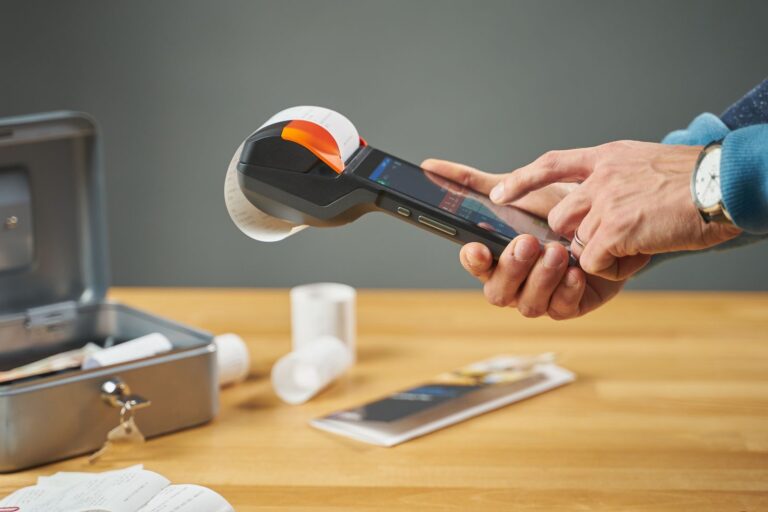
Mostly, yes. The Knot found 64% bought in person and about a third bought online, and more than half said the physical retail experience mattered to them. For most jewelers, the website’s job is to earn the visit, so a clear, quick way to book an appointment is essential.
Should a jewelry store’s bridal ads target the person buying or the person wearing the ring?
Both. The Knot found 79% of recipients were involved in the process and a quarter of couples shopped together. Rather than building narrow audiences, run creative that speaks to each: reassurance and honest guidance for the buyer, and shapes, settings and metals for the wearer. Let the creative sort the audience.
How early should a jeweler start marketing for engagement season?
Months ahead for familiarity, and well before Thanksgiving for the serious stage. Run useful content to a broad audience all year, keep reaching your warm audience over a long window, and publish your custom lead times early so that people planning a December or February proposal know when they have to order.
How much do people spend on an engagement ring?
The Knot’s 2026 study puts the average at $4,600. Medians in appraisal data run differently and vary sharply by stone, so treat any single figure as a rough guide and look at your own sales. It is also worth giving buyers some sense of your range on your site, since a nervous buyer tends to go where they do not have to ask.
This is part of our fine-jewelry operating series. For the long window, see retargeting for jewelry websites. For what to show in the quiet stage, see jewelry ad creative that actually stops the scroll.
Get known before they choose. Talk to both of them. Make booking easy. Print the dates. Keep the customer. If you want an operator running this with you, see how we work or email info@endicodatastrategic.com directly. The founder reads every inquiry within one business day.
Want an operator running this instead of reading about it?
The founder is on every account, and we do not work with two jewelers in the same trade area. No binding contracts, and you own everything: the ad account, the pixel, the creative, the audiences.
Book a strategy call →