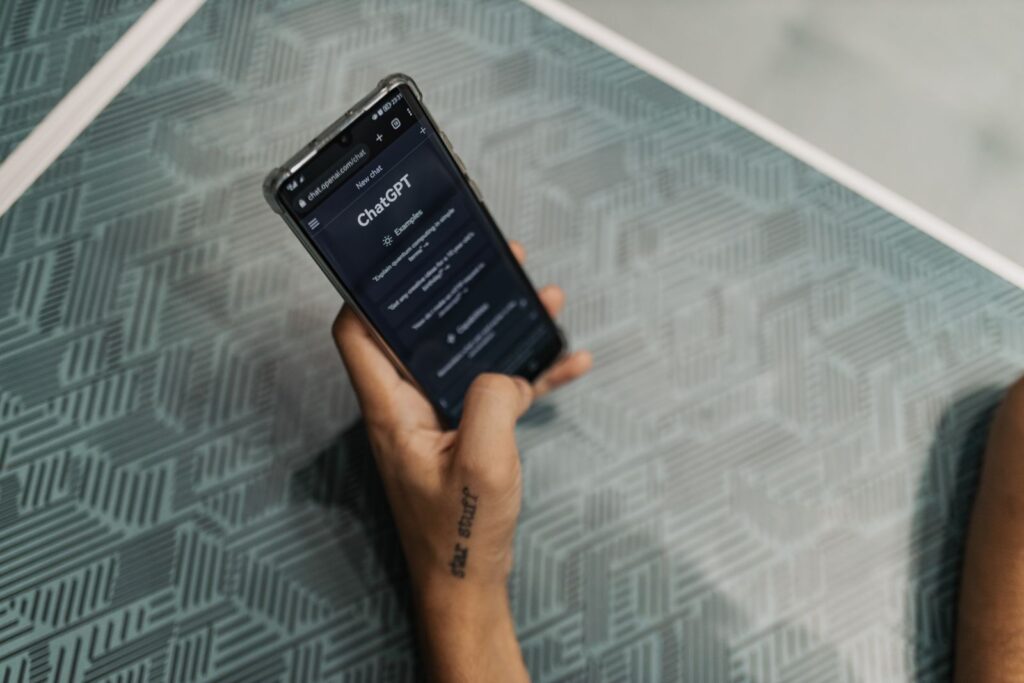
ChatGPT has ads now. Somewhere, a guru has already launched a $2,000 course on a product that has no benchmarks, and the testimonials are from the future.
Here is what is real. ChatGPT ads for jewelry brands are not a rumor or an invite-only pilot anymore. OpenAI has a self-serve Ads Manager, and a Shopify store in the US can connect its catalog. OpenAI also says, in writing, that there are no performance benchmarks yet. So nobody can tell you what these ads will do for your store. Anyone who says “we’re seeing great numbers for jewelers” should be asked who “we” is.
That uncertainty is the reason we would go early. Learning a platform is cheapest before everyone else shows up, and the window closes at about the time the first webinar starts.
OpenAI reports more than 1.2 billion weekly ChatGPT users and over 100,000 advertisers. Ads run on the Free and Go plans, are labeled, and do not influence answers. You can buy through partners or a self-serve Ads Manager, and US Shopify stores can sync a catalog directly. It is a beta with no benchmarks and delivery that can fluctuate. We would move early anyway: set up the pixel, clean the feed, set a budget you can afford to learn with, and judge it on what is left after the sale.
IWhat actually launched.
All of this is from OpenAI’s own pages, read in early November 2026. It is a beta, so check again before you plan around any of it.
Who sees the ads. OpenAI says more than 1.2 billion people use ChatGPT each week. Ads appear only on the Free and Go plans. Plus, Pro and Enterprise stay ad-free, so the 1.2 billion is the size of ChatGPT, not the size of your audience.
Where. 89 countries, and over 100,000 advertisers have run campaigns.
How the ad sits in the product. OpenAI says ads are clearly labeled and separate from answers, conversations stay private from advertisers, and advertising does not influence what ChatGPT answers. You see aggregated results, not anyone’s conversation.
How you buy. Through partners or a self-serve Ads Manager, which OpenAI describes as open to companies of all sizes. Bidding is by impressions (CPM) or clicks (CPC), and OpenAI’s FAQ also describes conversion-optimized campaigns. Measurement runs through a pixel and a Conversions API.
Before an ad can run. The same FAQ says ads must be reviewed, and your account may need to be verified.
How relevance works. OpenAI’s example is someone training for a first marathon who sees a grocery delivery ad next to a conversation about race-week meals. In other words, the ad follows the conversation.
IIWhy a jeweler should care before most businesses do.
Jewelry is a researched purchase. People compare, ask questions, get nervous and come back three weeks later. OpenAI’s own pitch is that it reaches people “when people are still evaluating their options”. That describes a ring buyer better than it describes almost anyone.
Picture somebody asking ChatGPT at 11:35 at night whether a diamond is overpriced. That is not a casual browser. That is a person with a budget, a partner and a rapidly deteriorating sleep schedule.
We have no data showing how often a jewelry ad appears in that conversation or what it does when it does. Nobody does. But it is the right kind of moment, and it is hard to buy anywhere else.
And the room looks empty to us. 100,000 advertisers sounds like a lot until you spread it over 89 countries and every category there is. That is our read, not OpenAI’s. Every jeweler within fifty miles of you is already fighting over the same Instagram users. On this platform you may be the only one who turned up.
IIIWhat moving early does not mean.
It does not mean believing anyone’s numbers. OpenAI says plainly there are no benchmarks across advertisers, industries or campaign types yet. So anyone promising you a jewelry benchmark is selling something OpenAI says does not exist yet. Ask to see the account, and watch how fast the subject changes.
It also does not mean expecting a smooth ride. Three things to know going in:
- Delivery can fluctuate. OpenAI says so about the beta. A campaign that spends unevenly is not automatically broken.
- A daily budget is an average. OpenAI’s published limits are twice that amount in a day and seven times it in a Sunday to Saturday week. If you set $100 a day, a $200 day is the system working as described.
- It will change under you. Formats, inventory and buying options are all still moving, by OpenAI’s own account.
Moving early is not the same as moving stupidly. Treat the first stretch as tuition: an amount you can afford to spend even if it sells nothing, paid to find out how this works before your competitors do. Do not take it out of the Meta campaign that is paying your rent.
IVYou cannot buy the answer.
This is the part people get wrong, so it gets its own section.
OpenAI says the product results ChatGPT shows when someone is shopping are selected independently and are not ads. And it says advertising does not influence answers. So you cannot pay ChatGPT to say your ring is the best one, which already puts it ahead of most “best jeweler in town” lists.
That gives you two separate jobs:
- Ads put you beside the conversation, labeled as an ad, as long as you keep paying.
- Answer engine optimization is how you get recommended inside the answer, which you cannot buy.
Doing one does not do the other. Whether you like it or not, AI is growing fast and exponentially, and you are not showing up on the AI platforms in front of potential customers when you should be. We looked at this in our study of jewelry stores and AI search, and for Shopify stores in answer engine optimization for Shopify jewelers.
VHow a jewelry store can start.
1. Fix the feed first. If you sell on Shopify in the US, the ChatGPT Ads app connects your catalog and store events to Ads Manager and syncs your inventory into a product feed. That feed is the same kind of work as your Meta catalog ads and your Google Shopping feed: real titles, real prices, real availability. A clean feed pays you on every platform you run. A dirty one embarrasses you on all of them at once.
2. Connect the pixel before you spend anything. On Shopify that is the OpenAI Pixel for Shopify. Off Shopify, it is the pixel or the Conversions API. Without it, you are funding a mystery. Check that a purchase actually registers, not just that the setup screen says it is connected.
3. Choose the simplest ad type. Through the Shopify app you get three: all products, a single product, or your website. If your online catalog is real and priced, start with products. If you sell mostly by appointment, or your best pieces do not have prices online, a website ad pointing to a page that answers the question is the more honest choice. OpenAI lists relevance to the user and landing page experience among the things results depend on, so do not send people to your homepage and hope.
4. Know about the budget steps. Inside Shopify, budgets move in fixed $25 increments. Ads Manager lets you set finer amounts. Pick a number you can leave alone for long enough to learn something.
5. Judge it like every other platform. Average order value minus cost per purchase, checked against what the store actually recorded. Compare it with your own Meta and Google numbers, since there is no outside benchmark to compare with. And give it time: a jewelry buyer who clicks on Tuesday may buy next month. A two-day verdict on a long-consideration purchase is a coin flip with extra steps.
6. Keep your notes. Which conversations seem to drive traffic, which pieces get clicked, which page holds people. Those notes are what you were paying for. Two years from now, this is what will be hard to buy.
VISelf-diagnostic: are you ready to go early?
The early-mover diagnostic.
- Is your product feed accurate on price and availability today?
- Can you see purchases from your current ad platforms in your store records?
- Do you have a pixel or Conversions API setup you trust somewhere already?
- Do you have a page that answers the questions a nervous ring buyer would ask?
- Do you have an amount you can spend with no return and still sleep?
- Is that amount separate from the budget of campaigns that are already working?
- Do you know your gross profit per sale, so you can judge this against something real?
- Can you leave it running long enough to learn, without pulling it on day three?
Three or more no’s and your first dollar belongs on fixing those, not on a new platform. The rest of you: go.
Straight answers
Can jewelry brands advertise on ChatGPT?
OpenAI’s self-serve Ads Manager is described as open to companies of all sizes, and ads go through review before they can run. Sign-up is at ads.openai.com, subject to availability in your country. US Shopify stores can also connect through the ChatGPT Ads app. Details are as of November 2026, and the product is in beta.
Are ChatGPT ads worth it for a jewelry store?
Nobody can say with data yet, because OpenAI itself says there are no performance benchmarks. We would still move early, because learning a new platform is cheapest before it fills up. Use an amount you can afford to learn with, keep it separate from campaigns that already work, and judge it on what is left after the sale.
Can you pay to be recommended by ChatGPT?
No. OpenAI says advertising does not influence ChatGPT’s answers and that product results are selected independently and are not ads. An ad appears beside the conversation and is labeled as an ad. Getting recommended inside the answer is a separate job, usually called answer engine optimization.
Who sees ChatGPT ads?
According to OpenAI, ads appear only on the Free and Go plans. Plus, Pro and Enterprise subscriptions stay ad-free. So the 1.2 billion weekly user figure is the size of ChatGPT overall, not the size of the audience an ad can reach.
How do ChatGPT ads work with Shopify?
The ChatGPT Ads app for Shopify connects your catalog and store events to Ads Manager, syncs your inventory into a product feed and sets up the OpenAI Pixel for Shopify. It is available to Shopify customers in the US, according to OpenAI. You can create campaigns for all products, a single product or your website.
How much do ChatGPT ads cost?
You set your own budget and can buy by impressions or clicks, and OpenAI’s FAQ does not list a minimum that we could find. Costs are not published as a benchmark. In the Shopify app, budgets move in $25 increments, and Ads Manager allows finer amounts. A daily budget is an average, with published limits of twice that in a day and seven times that in a week.
This is part of our fine-jewelry operating series. For the rest of the platforms, see Facebook ads vs Google ads for jewelry stores. For the feed underneath all of this, see Google Shopping for fine jewelry.
Clean the feed. Connect the pixel. Set the budget you can lose. Ignore the experts. Keep the notes. If you want an operator looking at your whole ad account as one thing, see how we work or email info@endicodatastrategic.com directly. The founder reads every inquiry within one business day.
See how your store scores on every signal in this report.
Delivered as a written report within 5 business days. You get the findings, the fixes, and the order to do them in, whether or not you ever work with us.
Request the audit →